How OpenAI o3 Cracked the Medical Mysteries That Stumped Doctors for Decades
OpenAI's o3 model helped Boston Children's Hospital analyze 376 undiagnosed patient genomes and identify 18 previously unknown rare diseases. Reported by Mindstream, the breakthrough shows how advanced AI reasoning can accelerate diagnosis for conditions that have eluded specialists for years.

For families living with an undiagnosed illness, the cruelest part is often not the illness itself — it is the silence. No name for the condition, no roadmap for treatment, and no community to turn to for support. Rare diseases, by definition, fall outside the experience of most physicians. Some families spend years, even decades, cycling through specialist after specialist, accumulating test results that explain nothing. According to Mindstream, many of these families eventually make their way to Boston Children’s Hospital, one of the most respected pediatric institutions in the world. And yet, even there, certain conditions have managed to stump the most seasoned experts — until now.
OpenAI o3 Enters the Clinic
Researchers at Boston Children’s Hospital decided to put OpenAI’s o3 model to work on one of medicine’s hardest problems: identifying rare genetic diseases from undiagnosed patient genomes. The results, reported by Mindstream citing NBC News, were remarkable. The model analyzed 376 undiagnosed patient genomes and identified 18 new diseases spanning neuromuscular, neurodevelopmental, and psychiatric categories. That works out to nearly 5% of the unknown conditions it was asked to evaluate — a figure that sounds modest until you consider just how long those 18 families had been waiting for answers.

To appreciate why this matters, you need to understand the scale of the problem the model was tackling. Human DNA contains around 20,000 protein-coding genes. Identifying the single gene — or the precise mutation within it — responsible for a child’s rare illness is an extraordinarily demanding task. Clinicians can and do perform this work, but it is slow, labour-intensive, and subject to the very human limitations of fatigue and cognitive bandwidth. A researcher can only hold so many data points in mind at once. An AI model, by contrast, can cross-reference an enormous dataset — such as the entire known human genome — without tiring, without losing focus, and at a speed no human team could match.
Why o3 Is Suited to This Challenge
OpenAI’s o3 model is not a general-purpose chatbot applied to a medical spreadsheet. As Mindstream notes, the model excels specifically in STEM domains and has been deployed for PhD-level scientific analyses. This matters enormously in a genomics context. The task of linking a novel genetic variant to a clinical phenotype requires reasoning across multiple layers of biological knowledge — molecular biology, protein function, disease pathway literature, and population genetics data. It is precisely the kind of complex, multi-step inference where o3’s design gives it an advantage over earlier models.
Boston Children’s Hospital researchers essentially used the model as a force-multiplier for their own expertise. They brought the clinical judgment and the patient data; o3 brought the capacity to process and pattern-match across a dataset at a scale that compressed what might otherwise have been years of investigative work.
What a Diagnosis Actually Means
It is worth pausing on what the word “diagnosis” means in this context — and what it does not mean. An accurate diagnosis does not deliver a cure. For many rare genetic conditions, no proven treatment yet exists. But a diagnosis is the essential first step toward everything that follows: access to clinical trials, connection to specialist researchers who study that specific condition, eligibility for experimental therapies, and the profound psychological relief of finally having a name for what your child is experiencing.
“While AI doesn’t guarantee a cure, an accurate diagnosis is the first step towards progress.” — Mindstream
For the 18 families whose cases were resolved through this research, that first step had been missing for years. The identification of their conditions across neuromuscular, neurodevelopmental, and psychiatric categories opens doors that were previously closed — not just for them, but potentially for other patients who may later be diagnosed with the same newly identified diseases.
The Needle-in-a-Haystack Problem at Scale
Genomics has always had a data problem. Sequencing technology has advanced so rapidly that the bottleneck is no longer generating genetic data — it is interpreting it. Whole-genome sequencing can produce terabytes of information per patient, the vast majority of which represents normal variation. Identifying the pathogenic variant among thousands of benign ones requires both deep biological knowledge and the patience to work through an enormous search space systematically.
This is precisely the kind of task where large language models with strong reasoning capabilities can contribute meaningfully. The model does not replace the clinician’s interpretive judgment or the patient’s clinical history. It accelerates the process of narrowing down the search space, flagging candidates that warrant further investigation, and cross-referencing those candidates against the existing literature. In a field where the rarest diseases may affect only a handful of patients worldwide, even a single correct identification can be the difference between years more of uncertainty and a path forward.
Broader Implications for AI in Medicine
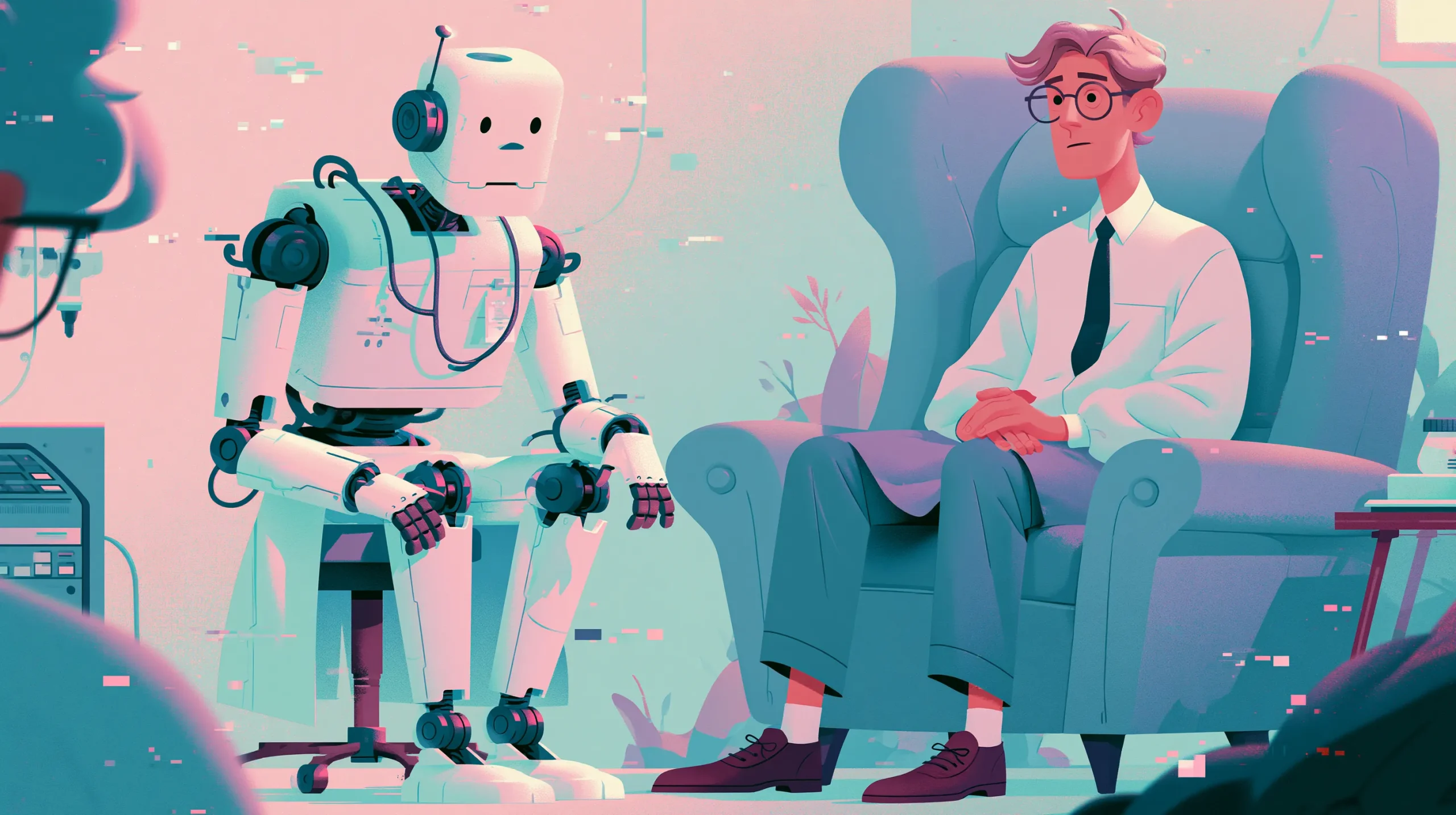
The Boston Children’s Hospital collaboration is part of a broader shift in how AI models are being integrated into clinical research. What distinguishes this application from earlier AI-in-medicine efforts is the sophistication of the reasoning involved. Earlier machine learning approaches in genomics were largely pattern-matching tools trained on known disease associations. o3’s application here involved something closer to scientific reasoning — generating and evaluating hypotheses about previously unknown disease mechanisms.
This has significant implications for how healthcare systems globally, including in India where rare disease diagnosis infrastructure remains under-resourced, might begin to think about deploying AI. India has a substantial rare disease burden, with conditions like spinal muscular atrophy, Gaucher disease, and various lysosomal storage disorders affecting tens of thousands of families. Access to specialist genomic interpretation is limited outside of major metropolitan centres. Tools that can extend the diagnostic reach of existing clinical teams — without requiring each hospital to maintain a full rare-disease genomics unit — represent a potentially transformative development.
A 5% Solution That Changes Everything
Five percent sounds like a small number. In a research trial, it might even be described as a modest result. But consider what that 5% actually represents: 18 children and families who now have an answer they had been denied, sometimes for the entirety of the child’s life. Each of those diagnoses required the identification of a novel disease — not a rare condition with an existing entry in the medical literature, but a previously undescribed one. That is a meaningful scientific contribution, not just a diagnostic convenience.
As Mindstream reports, the conditions identified span three broad categories: neuromuscular, neurodevelopmental, and psychiatric. Each category carries its own clinical complexity, its own specialist community, and its own landscape of potential interventions. The work done at Boston Children’s Hospital does not just benefit the 18 families directly involved; it expands the map of known human disease, creating reference points that future patients and clinicians can use.
What Comes Next
The collaboration between OpenAI and Boston Children’s Hospital is an early signal of where the intersection of large language models and life sciences is heading. As models become more capable of scientific reasoning and as genomic databases grow larger and more comprehensive, the proportion of undiagnosed cases that AI can help resolve is likely to increase. The 5% figure reported in this study may, in retrospect, come to look like a floor rather than a ceiling.
For now, the most important takeaway is straightforward: AI did not replace the clinicians, the researchers, or the families who fought for answers. It gave them a tool powerful enough to finally find some. In medicine, that is not a small thing. That is everything.