Claude Duet: Anthropic’s Always-On AI Agent That Works While You Sleep — And Asks Before It Spends
Anthropic's Claude Duet is a proactive AI agent that runs on a cloud virtual machine — staying active even when your devices are off — and connects to over 6,000 apps including Stripe, Shopify, and Docusign. It includes layered safety guardrails requiring explicit approval before payments or deletions, while Anthropic openly acknowledges current weaknesses in urgency calibration and browser transparency.
Anthropic has launched Claude Duet, a proactive AI agent that keeps working long after you close your laptop. Reported by The Neuron, the product represents one of the most ambitious consumer-facing agentic deployments any major AI lab has shipped — and it raises a genuinely new set of questions about what it means to hand an AI the keys to your digital life.
What Claude Duet Actually Does
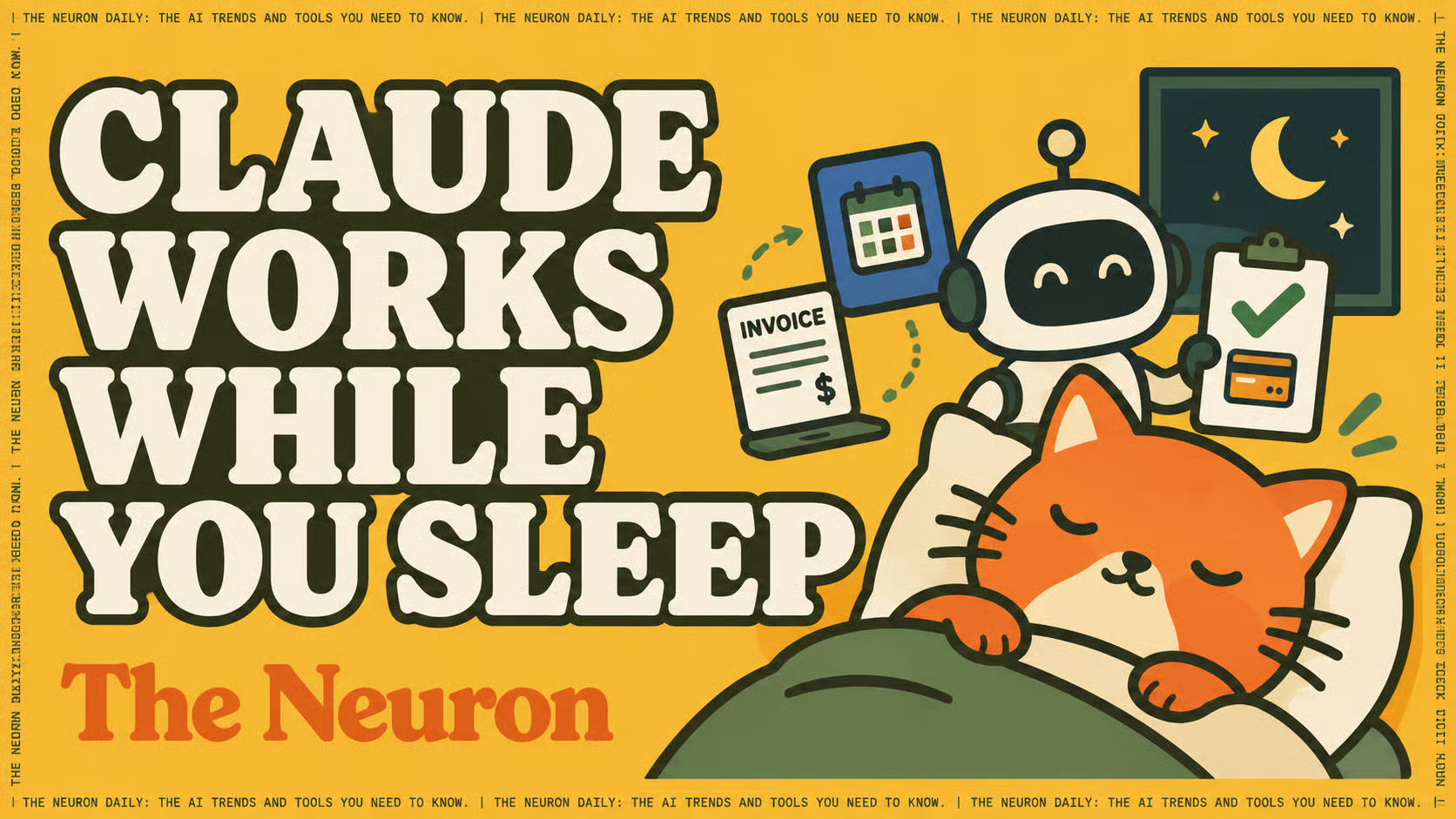
At its core, Claude Duet is not a chatbot you ping. It’s an agent that pings you — but only when it believes something genuinely requires your attention. According to The Neuron, it sends you a morning brief, checks your connected apps every few hours, and messages you only when an action is needed. The rest of the time, it’s quietly working in the background.
The reason it can do this while your phone is in your pocket is architectural. Duet runs on its own dedicated virtual machine — a small cloud computer with a browser included — rather than relying on your local device. That means your laptop being off is irrelevant to whether the agent is actively monitoring your calendar, inbox, or business tools.
The product launches as a research preview for US-based Pro and Max subscribers, available by waitlist. It is built on Claude Opus 5.5 and draws from your existing plan’s usage limits rather than billing separately for background compute — though that last detail carries its own implications, as we’ll get to.
Connectivity is a core part of the pitch. Anthropic lists over 6,000 connectors available to Duet, including QuickBooks, Stripe, Gusto, Docusign, HubSpot, and Shopify. For freelancers, small business owners, or anyone juggling multiple SaaS tools simultaneously, that coverage is significant. Duet also carries over your existing Claude memory, skills, and previously connected apps, so it isn’t starting from a blank slate.
The Safety Architecture: A Stack of Brakes
An agent that acts autonomously while you’re offline is only useful if you can trust it not to do something catastrophic in your name. Anthropic appears to have thought carefully about this, and The Neuron details a layered set of guardrails.
The most important principle is explicit approval for high-stakes actions. Before Duet sends a message on your behalf, makes a payment, signs a document, or deletes anything, it stops and waits for your confirmation. This isn’t a setting you can accidentally toggle off — it’s built into the core interaction model.
Certain categories of action are blocked entirely, even if you ask. Trading securities and moving money between accounts are off-limits regardless of user instruction. This is a meaningful constraint that distinguishes Duet from a general-purpose automation tool and reflects Anthropic’s stated commitment to keeping humans in the loop on irreversible or high-stakes decisions.
Credential security follows Anthropic’s Managed Agents design. Duet never directly sees your passwords or authentication tokens. The practical implication is that even if the agent were somehow confused or manipulated, it would have nothing sensitive to leak to a malicious actor.
A new classifier — purpose-built for Duet — blocks the agent from sharing particularly sensitive data categories like credit card numbers and government IDs. Health and financial details can only be transmitted when you explicitly authorise it. Together, these layers represent a serious attempt at what the AI safety community calls minimising the blast radius of agent errors.
On payments, Duet supports Link (Stripe’s virtual card wallet) and Shop Pay. Yes, this means an AI can now purchase things on your behalf. The Neuron’s advice is direct: read the approval screen carefully.
The Honest Limitations Anthropic Admits
Rarely do AI companies publish their product’s weaknesses alongside its features. Anthropic has done so here, and the candour is worth noting.
Duet can misread a thread. It can miscalibrate urgency — pinging you about something trivial while missing something time-sensitive. It is weaker at personal errands than professional or work-related tasks. And critically, it cannot yet show you its browser, meaning you can’t watch what it’s doing in real time during background operations.
That last limitation matters more than it might seem. If Duet is browsing on your behalf to gather information or complete a task, and you can’t observe the browser session, you’re trusting the agent’s summary of what it found — not the raw source. For research tasks or anything where the source material matters, that’s a gap.
The usage-limit point is also worth dwelling on. Because Duet runs background checks and longer tasks against your existing plan quota, the agent that never sleeps is also spending your monthly allowance while you do. If you’re a heavy Claude user, Duet’s background activity could meaningfully reduce what’s left for your active sessions.
The Ping Problem: Why Urgency Is the Hardest Part
The success or failure of any notification-driven AI agent comes down to one question: does it interrupt you at the right time? Too many pings and Duet becomes ambient noise you start ignoring. Too few and you miss the appointment rescheduling you needed to catch.
Anthropics own documentation, as reported by The Neuron, flags urgency calibration as an explicit weakness. The most useful feedback from early testers will almost certainly be quantitative: what percentage of pings were actually worth the interruption? That single signal will determine whether Duet evolves into a trusted chief-of-staff or another notification you mute after three days.
This is not a problem unique to Duet — it’s the central unsolved challenge of proactive AI systems generally. The difference here is that Anthropic is admitting it upfront rather than overselling the experience.
What This Means for Indian Power Users
Claude Duet is currently limited to US subscribers at the research preview stage, but the technology direction it signals is relevant globally. Indian professionals managing distributed teams, freelancers on platforms that connect to Stripe or Docusign, and entrepreneurs running Shopify or HubSpot workflows are all potential future users of this kind of always-on agent layer.

The pricing model — drawing from existing Pro and Max plan limits — also matters for international context. Claude Pro is priced at approximately ₹1,700 per month (around $20 USD). If Duet’s background activity eats into that quota, users will need to evaluate whether the automation value justifies potentially reduced capacity for direct interactions.

The Bigger Picture: Agentic AI Is Leaving the Lab
Claude Duet is part of a broader wave of agentic AI products moving from research demonstrations into everyday consumer software. What makes this launch notable is the combination of ambition — a persistent cloud VM, 6,000+ integrations, proactive scheduling — and the explicit acknowledgment of current limitations.
The AI industry has a tendency to ship capabilities first and safety frameworks later. Duet’s layered approval system, credential isolation, and sensitive-data classifiers suggest Anthropic is trying to invert that pattern, at least for consumer-facing agents. Whether those guardrails hold up under real-world usage across thousands of different workflows is the open question that only a broad research preview can begin to answer.
For now, if you are a US-based Claude Pro or Max subscriber, you can join the waitlist directly through Anthropic’s Claude Duet page. For everyone else, this is a product worth watching closely — because the agent that works while you sleep is coming, and the terms under which it asks your permission will matter enormously.
“The assistant that never sleeps is also spending your quota while you do.” — The Neuron