Prompt Engineering in India: From LinkedIn Buzzword to Rs 2 Crore Career Reality
Prompt engineering in India has evolved from a LinkedIn buzzword into a legitimate technical career path with salaries reaching Rs 2 crore for global remote roles. The field has matured into "AI context engineering," requiring programming skills, system architecture knowledge, and business problem-solving capabilities rather than just creative AI interaction.
What started as a LinkedIn buzzword has transformed into one of India’s fastest-growing tech careers. According to a recent analysis by YourStory (https://yourstory.com/2026/02/ai-prompt-engineer-job-career-path), prompt engineering in India has evolved far beyond clever chatbot instructions into a sophisticated technical discipline that commands serious compensation.
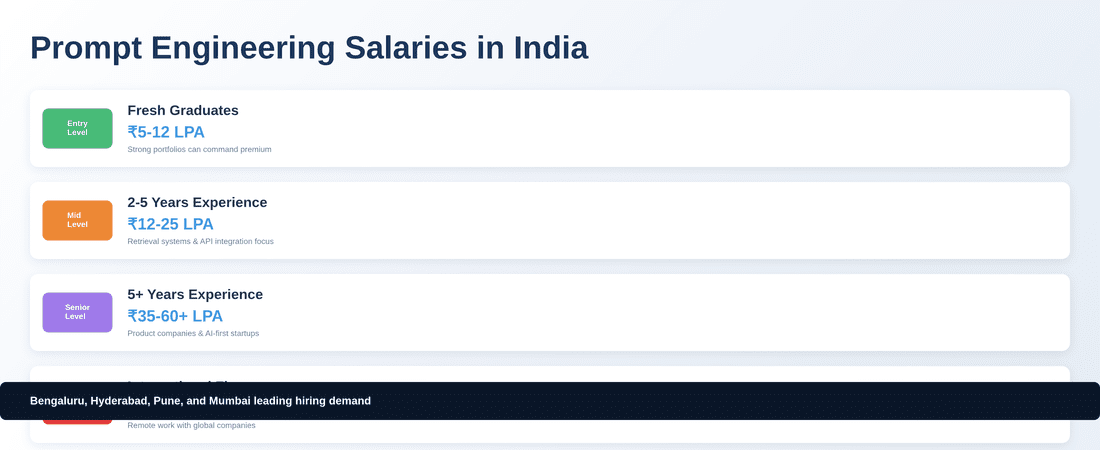
The numbers tell a compelling story. Entry-level prompt engineers in India are starting at Rs 5-10 LPA, with exceptional candidates reaching Rs 12 LPA. Mid-level professionals with 2-5 years of experience command Rs 12-25 LPA, while senior specialists can earn Rs 35-60+ LPA. Most remarkably, Indian professionals working with global firms are reporting remote salaries ranging from Rs 80 LPA to over Rs 2 crore.
The Evolution Beyond Basic Prompting
The Indian market has moved decisively past the early days of simple AI prompting. LinkedIn has identified prompt engineering as one of the fastest-growing skills in India for 2026, but the role itself is undergoing a fundamental transformation.
What companies now seek is “AI context engineering” – professionals who can design structured reasoning systems, manage complex AI workflows, and build intelligent agents capable of solving multi-step business problems. This shift reflects India’s position as a global hub for sophisticated AI development, not just basic implementation.
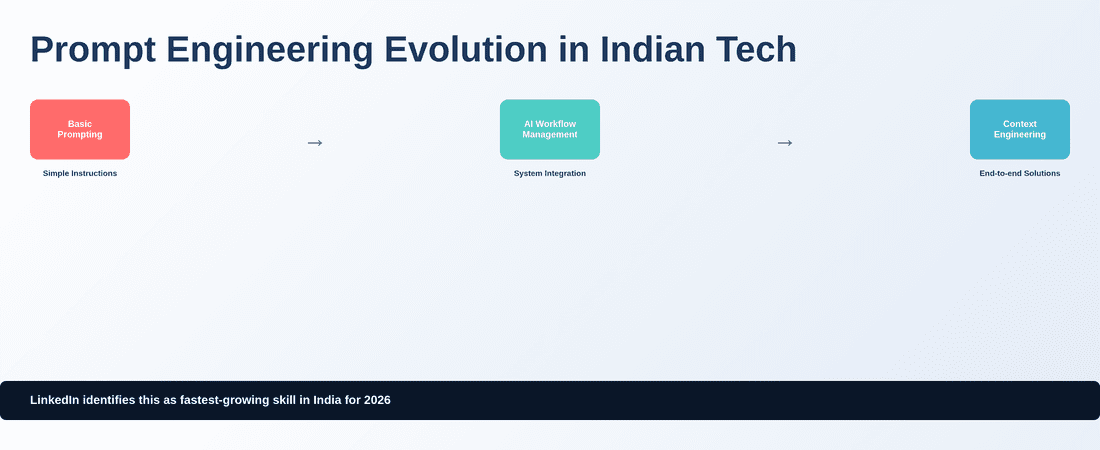
The evolution has created hybrid roles like AI Integration Engineer and Generative AI Developer. Instead of working in isolation, these professionals build end-to-end AI solutions that integrate with existing business systems – a natural fit for India’s strong software services heritage.
Geographic Concentration and Industry Expansion
Bengaluru remains India’s primary AI hiring hub, followed by Hyderabad, Pune, and Mumbai. This concentration makes strategic sense given these cities’ existing tech infrastructure and talent pools. Major Indian IT services companies like TCS and Accenture are actively hiring, alongside global firms like NVIDIA establishing significant AI operations in India.
The demand extends well beyond traditional IT services. Indian FinTech companies, healthcare startups, and e-commerce platforms are integrating AI-driven decision-making systems. Emerging Indian AI companies like Sarvam AI and Krutrim represent a new wave of domestic demand for advanced prompt engineering skills.
This geographic and industry expansion reflects India’s unique position in the global AI ecosystem – combining deep technical talent with diverse industry applications across one of the world’s largest digital economies.
Technical Requirements: Beyond Creative Writing
The Indian job market has clarified what prompt engineering actually requires. Recruiters now expect a combination of programming skills (Python, SQL), familiarity with modern AI architectures, and hands-on experience with frameworks like LangChain. Vector databases like Pinecone have become standard requirements.
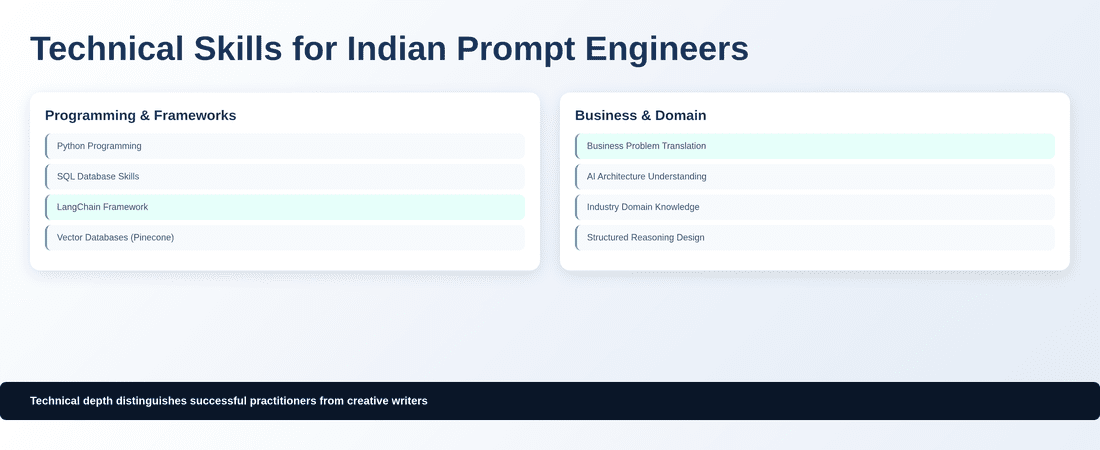
More importantly, successful candidates demonstrate the ability to translate business challenges into structured AI solutions. This requirement aligns perfectly with India’s traditional strength in business process understanding and technical implementation.
The shift toward technical rigor has separated serious practitioners from those who viewed prompt engineering as “creative writing for AI.” Indian professionals who approach this as an engineering discipline are finding significantly more opportunities and higher compensation.
Implications for Indian Businesses and Policy
For Indian enterprises, this evolution presents both opportunities and challenges. Companies that invest in building internal AI context engineering capabilities can gain competitive advantages in automation and decision-making. However, the salary expectations – particularly the Rs 2 crore figures for global remote work – create retention challenges for domestic employers.
From a policy perspective, India’s positioning in this space requires attention to several factors. The country’s IT education system needs to integrate these evolving AI skills into curricula. Additionally, as Indian professionals command premium salaries in global markets, there’s an opportunity to attract international AI projects and investments.
The regulatory environment also matters. As prompt engineers increasingly work with sensitive business data across industries like FinTech and healthcare, compliance with India’s Digital Personal Data Protection Act becomes crucial. Companies hiring in this space must ensure their AI systems and workflows meet domestic regulatory requirements.
Market Maturation and Future Trajectory
The Indian prompt engineering market shows signs of healthy maturation rather than hype-driven growth. The salary ranges, while impressive, reflect genuine skill scarcity rather than speculative bubble pricing. The technical requirements have solidified around concrete skills rather than vague “AI fluency.”
This maturation benefits the broader Indian tech ecosystem. As prompt engineering becomes a foundational capability rather than a standalone role, it enhances the productivity of existing software development, data analysis, and business consulting functions. Indian IT services companies can leverage these capabilities to deliver more sophisticated solutions to global clients.
Strategic Considerations for Indian Professionals
For Indian tech professionals considering this career path, the data suggests focusing on technical depth rather than surface-level AI interaction. The highest-paying opportunities require strong programming fundamentals, understanding of AI system architecture, and domain expertise in specific industries.
The global remote work opportunities are particularly significant for Indian professionals, given the currency arbitrage advantages. However, succeeding in these roles requires understanding international business contexts and working effectively across time zones – skills that many Indian IT professionals already possess.
The Broader Economic Impact
Prompt engineering’s growth in India represents more than individual career opportunities. It signals India’s evolution from an AI implementation market to an AI innovation hub. The technical sophistication required for advanced prompt engineering aligns with India’s strengths in software architecture and system integration.
As these skills become more widespread, they’ll likely drive productivity improvements across multiple sectors of the Indian economy. Companies that embrace AI context engineering early may gain sustainable competitive advantages in their respective markets.
The career path from basic prompting to AI context engineering reflects India’s broader technological trajectory – moving from service provider to innovation leader in critical emerging technologies. For professionals willing to invest in the technical depth required, prompt engineering offers a legitimate path to high-compensation careers that contribute to India’s AI leadership ambitions.
The question is no longer whether prompt engineering is a real career path in India, but how quickly professionals and organizations can develop the sophisticated capabilities the market now demands.