The One Prompting Technique That Changes How AI Actually Thinks
Chain-of-thought prompting instructs AI models to reason through intermediate steps before reaching a conclusion, dramatically reducing errors in complex, multi-step tasks. For professionals working in high-stakes domains, understanding and applying this technique is the difference between AI that guesses and AI that thinks.
There is a version of AI that guesses. And there is a version that thinks. The difference between the two is often not the model you use, not the platform you pay for, and not the size of the context window you feed it. The difference is frequently a single design decision in how you frame your request.
That design decision has a name: chain-of-thought prompting. And if you are using AI tools in any professional capacity — for financial analysis, legal interpretation, engineering problem-solving, or business strategy — understanding this technique is no longer optional. It is foundational.
What Chain-of-Thought Prompting Actually Does
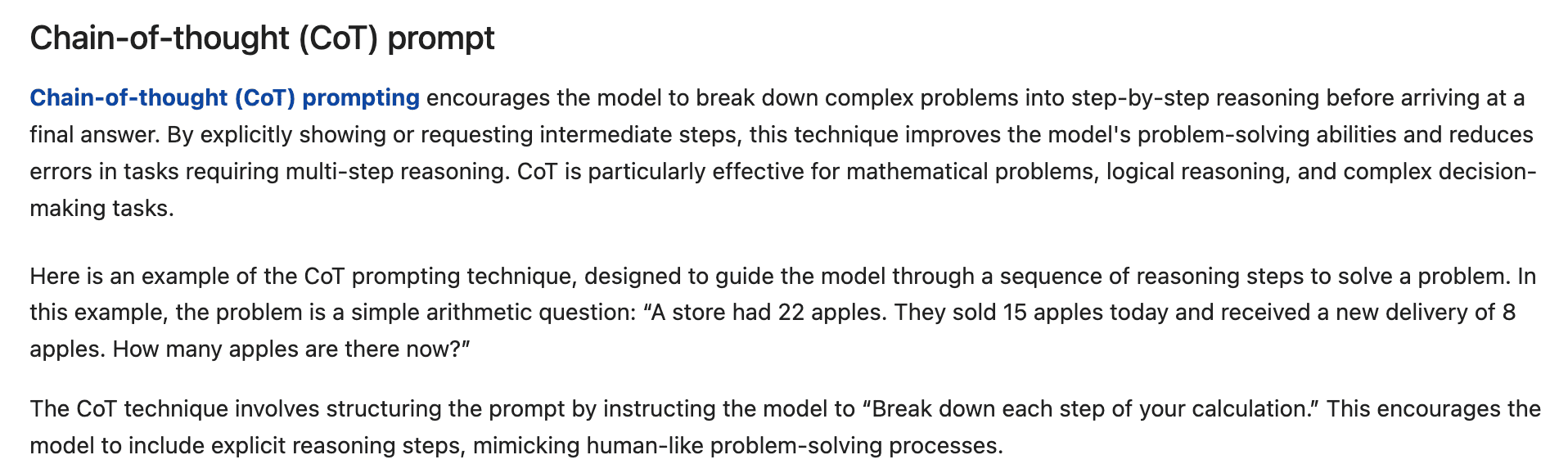
A recent technical documentation guide captured the definition precisely. Chain-of-thought (CoT) prompting, as the guide explains, “encourages the model to break down complex problems into step-by-step reasoning before arriving at a final answer.” The critical phrase here is before arriving at a final answer. You are not asking the model to annotate a conclusion it has already reached. You are asking it to construct the reasoning pathway first, and let the answer emerge from that pathway.
This is not cosmetic. It is structural. When a large language model generates text, it is, at a fundamental level, predicting the next token based on everything that came before. If you ask it a complex question and demand an immediate answer, the model’s answer becomes the thing it was most likely to generate given the question alone. When you instead instruct it to reason through intermediate steps, each step becomes part of the context that informs the next step — and ultimately informs the final answer. The model is, in effect, building a scaffolding of logic that supports whatever conclusion it reaches.
The documentation illustrates this with a deliberately simple example: A store had 22 apples. They sold 15 apples today and received a new delivery of 8 apples. How many apples are there now? The arithmetic is trivial. But the principle it demonstrates is not. By instructing the model to “break down each step of your calculation,” you are asking it to surface the intermediate logic — 22 minus 15 equals 7, then 7 plus 8 equals 15 — rather than simply producing 15 as if by reflex.
When the problem is simple, this feels unnecessary. When the problem is complex, it becomes the entire difference between a useful output and a confidently wrong one.
Why Models Get Multi-Step Problems Wrong Without It
To understand why CoT prompting matters, you need a rough mental model of where AI errors tend to cluster. Models do not fail uniformly across all task types. They tend to perform well on pattern-matching tasks, on synthesis, on summarisation, and on tasks where the answer is strongly suggested by the form of the question. They fail more often on tasks that require holding multiple logical dependencies in sequence — where step three is only valid if step two was handled correctly, and step two depends on a constraint established in step one.
This is precisely the domain the documentation identifies as CoT’s sweet spot: “mathematical problems, logical reasoning, and complex decision-making tasks.” These are not edge cases in professional work. They are the core of professional work.
Consider what this means in practice. A chartered accountant using an AI tool to reason through a multi-jurisdictional tax scenario is not asking a simple question. A product manager asking an AI to evaluate whether a feature trade-off is strategically sound is not asking for a pattern match. A lawyer asking an AI to work through whether a clause creates downstream liability is not asking for a summary. In every one of these cases, the quality of the answer depends entirely on the quality of the intermediate reasoning — and that intermediate reasoning will not appear unless you explicitly ask for it.
The Prompting Gap Most Professionals Don’t Know Exists
Here is the uncomfortable reality that the documentation points toward without stating it directly: most people using AI tools in professional settings are not prompting for chain-of-thought reasoning. They are asking questions the way they would type a search query, or the way they would ask a colleague across a desk. They want answers, not process. And so they write prompts that request conclusions, and they receive conclusions — sometimes correct, sometimes not, with no visible reasoning trail to help them tell the difference.
The gap is not between novice and expert AI users in some abstract sense. The gap is between users who understand that the structure of a prompt shapes the structure of the model’s reasoning, and users who treat the prompt as merely the question and the output as merely the answer.
Chain-of-thought prompting closes that gap in a specific and actionable way. The technique, as the documentation describes it, involves “structuring the prompt by instructing the model to include explicit reasoning steps, mimicking human-like problem-solving processes.” That phrase — mimicking human-like problem-solving processes — is worth sitting with. It is not claiming that AI thinks like a human. It is saying that when you design the prompt to surface step-by-step reasoning, the output becomes legible in a way that resembles how humans document their own thinking. And legibility is what allows you to audit, correct, and trust the result.
How to Apply This in Practice
The practical implementation is simpler than the theory. You do not need to write elaborate prompts or learn a specialized syntax. You need to add an explicit reasoning instruction to any prompt where the task involves multiple steps, conditional logic, or a conclusion that depends on intermediate calculations.
Some formulations that work, drawn from the spirit of the documentation’s guidance:
- “Walk me through each step of your reasoning before giving me your final answer.”
- “Break down each stage of your analysis and explain how you moved from one step to the next.”
- “Think through this problem step by step. Show your work.”
The specific phrasing matters less than the principle: you are signaling to the model that intermediate steps are not just acceptable, they are required. You are not asking for a shortcut. You are asking for a process.
For Indian professionals using AI tools in domains like finance, engineering, consulting, and legal services — fields where a single reasoning error can have material consequences — this distinction is not academic. When the stakes of a wrong answer are denominated in lakhs or crores, the question of whether your AI tool is guessing or reasoning deserves serious attention. CoT prompting does not guarantee correctness, but it does give you something a direct-answer prompt never can: a visible chain of logic you can interrogate and verify.
The Deeper Implication
Chain-of-thought prompting is ultimately a lesson about the relationship between transparency and reliability. The more of its reasoning a model is forced to surface, the more opportunities you have to catch errors before they become conclusions you act on. This is why the technique reduces errors in multi-step tasks — not because it makes the model smarter in some absolute sense, but because it forces the model’s reasoning into the open where both the model and the user can check it.
As AI tools become more deeply embedded in professional workflows, the ability to distinguish between a model that is reasoning and a model that is performing the appearance of reasoning will become one of the most valuable skills a knowledge worker can develop. Chain-of-thought prompting is not just a technique. It is a habit of mind — one that asks AI not merely for answers, but for the thinking that earns them.