Anthropic’s $895.4 Billion IPO Bombshell: What the Numbers Reveal About AI’s Infrastructure Hunger
Anthropic's amended IPO filing disclosed $895.4 billion in total purchase and lease commitments, with roughly $70 billion due within a year — a figure that lays bare the staggering infrastructure costs of competing at the AI frontier. The Neuron reported the disclosure, which arrives alongside similar capital-raising moves by Oracle and new power-management programmes from OpenAI, painting a vivid picture of an industry racing to lock in compute at unprecedented scale.
When a company files paperwork with the SEC before going public, the numbers buried in those documents often tell a story that press releases never would. For Anthropic, the maker of the Claude family of AI models, that story has a headline figure that is difficult to wrap your head around: $895.4 billion in total commitments for purchases and leases, as disclosed in an amended IPO filing and reported by The Neuron.
To put that in Indian rupee terms, that is roughly ₹76.1 lakh crore — a sum that dwarfs the annual budget of many countries and exceeds the GDP of a significant number of economies. Even the near-term slice is breathtaking: approximately $70 billion (roughly ₹5.95 lakh crore) is due within a single year.
What Exactly Are These Commitments?
The term “commitments” in an IPO filing covers binding obligations a company has already signed — contracts for computing infrastructure, data center leases, cloud capacity reservations, and similar long-term agreements. These are not aspirational spending goals or analyst projections. They are legally enforceable obligations that show up in SEC filings because investors have a right to know what a company has already promised to pay.
For Anthropic, the sheer scale of these commitments signals something fundamental about how the frontier AI business actually works. Training large language models and serving millions of inference requests every day requires an almost unimaginable amount of compute — graphics processing units, specialised AI chips, networking hardware, cooling systems, and the physical real estate to house all of it. None of that comes cheap, and none of it can be spun up overnight. Companies like Anthropic have to lock in capacity years in advance, signing long-term agreements with cloud providers and data centre operators to guarantee that the compute will be there when they need it.
The IPO Filing in Context
The SEC filing referenced by The Neuron is an amended S-X1A document — a form used by companies preparing for a public offering to update their financial disclosures. The fact that Anthropic is filing an amended version suggests the IPO process is well underway, with the company refining its disclosures as it prepares to open itself to public market scrutiny.
Going public is a significant milestone for any startup, but for an AI safety company that has historically operated with a degree of opacity about its finances, the disclosure requirements of a public listing are particularly revealing. Investors, regulators, and competitors can now see, with unusual clarity, the financial bets Anthropic has placed on the future of AI infrastructure.

Why This Number Matters for the Broader AI Race
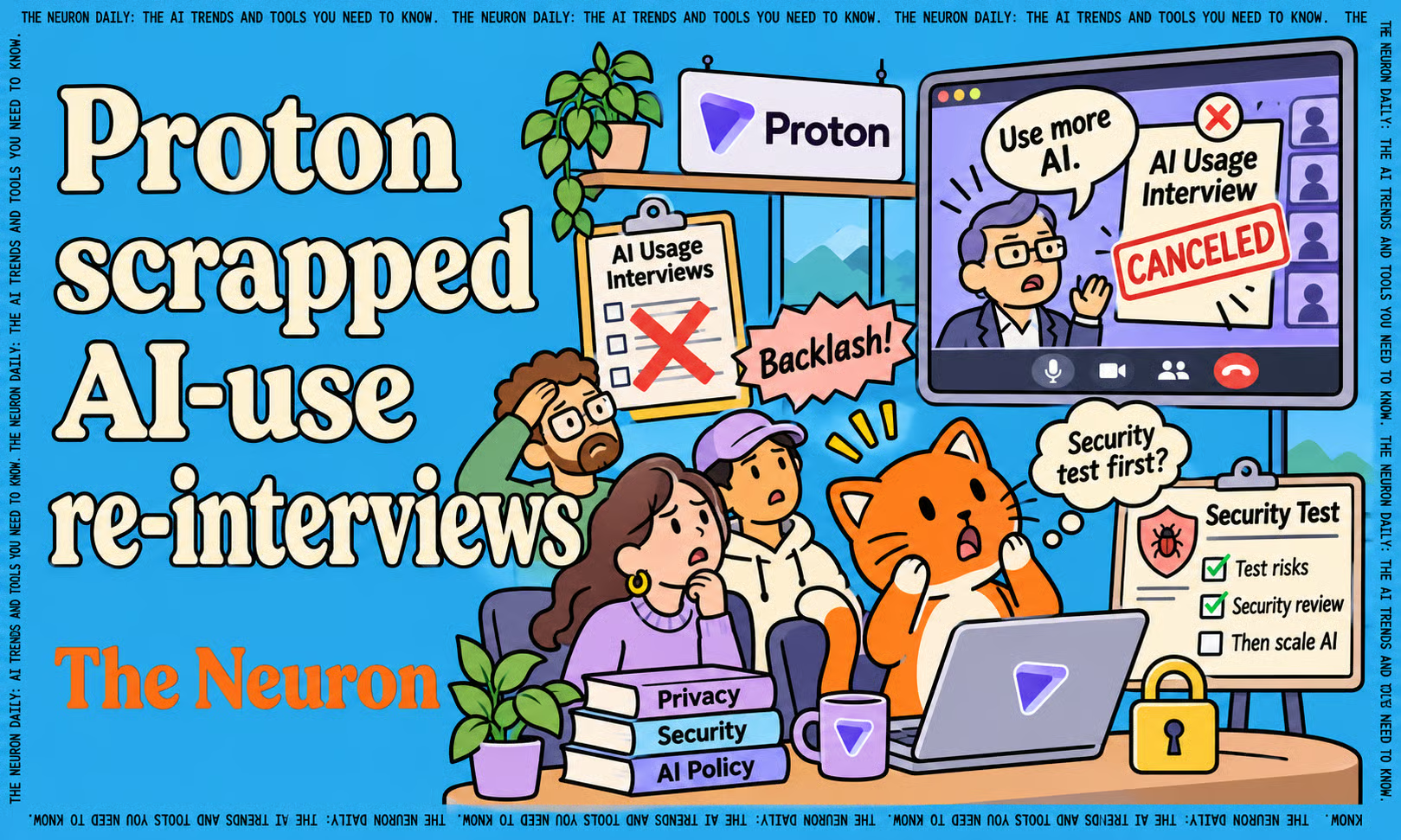
The $895.4 billion figure does not exist in isolation. The same issue of The Neuron that broke down Anthropic’s filing also reported that Oracle announced plans to raise $20 billion — through $10 billion in stock and $10 billion in bonds — specifically for its own AI infrastructure buildout. Oracle’s shares fell nearly 6% on that news, suggesting markets are growing sensitive to the capital intensity of the AI arms race even as they remain enthusiastic about the opportunity.
Separately, OpenAI launched a programme called Grid Protectors, designed to have new compute campuses voluntarily cut power demand during periods of grid stress — starting with up to 1 gigawatt in Effingham County, Georgia. That detail underscores just how much electricity the AI industry now consumes: a single compute campus can place gigawatt-scale demands on regional power infrastructure.
Taken together, these data points paint a consistent picture. The leading AI companies are not just building software products. They are constructing a new layer of physical infrastructure — one that requires capital commitments measured in the hundreds of billions, power reservations measured in gigawatts, and planning horizons measured in years, not quarters.
The Safety Company That Needs Supercomputer-Scale Resources
There is a particular irony worth noting in Anthropic’s case. The company was founded explicitly on an AI safety mission — several of its founders left OpenAI over concerns about the pace at which capabilities were being pushed ahead of safety research. Yet the competitive reality of the frontier AI market means that even a safety-first company must spend at a scale that rivals the largest technology infrastructure projects ever undertaken.
You cannot build and study frontier AI models without actually building frontier AI models. And frontier AI models require the kind of compute that only billion-dollar-plus commitments can secure. The safety mission and the infrastructure imperative are not necessarily in contradiction, but the numbers make clear that idealism alone cannot sustain a position at the frontier — capital can.
What the $70 Billion Near-Term Obligation Signals
The breakdown between near-term and long-term obligations is worth examining carefully. Of the $895.4 billion total, approximately $70 billion falls due within a year. That is not a theoretical future liability — it is a cash flow requirement that Anthropic’s post-IPO balance sheet will need to accommodate in the near term.
For Indian technology investors and observers watching the global AI market, this kind of number reframes the conversation about what it takes to compete at the frontier. Domestic AI initiatives, however well-resourced by Indian standards, are operating in a market where a single private competitor has already committed nearly ₹6 lakh crore in obligations due within twelve months.

What Remains Unknown
The Neuron’s reporting is grounded in the SEC filing itself, which provides the commitment totals but does not break down every counterparty or the precise mix of cloud contracts versus physical leases versus hardware purchase agreements. What we can say with confidence is that the obligations are real, they are large, and they are now a matter of public record.
What the filing does not tell us — and what analysts will be scrutinising as the IPO process continues — is whether Anthropic’s revenue trajectory is growing fast enough to service these commitments comfortably, or whether the company is betting aggressively on a future market size that has not yet fully materialised.
The Bigger Picture
The Anthropic IPO filing is a landmark moment not just for one company but for the AI industry as a whole. It transforms a private bet on the future of artificial intelligence into a public document that anyone can read on the SEC’s EDGAR database. The commitments disclosed within it confirm what many in the industry have suspected: the infrastructure war underpinning the AI race is being fought at a scale that makes almost every other technology buildout in history look modest by comparison.
For builders, investors, and observers in India and around the world, the number to remember is $895.4 billion — not as an abstraction, but as a concrete signal of how much the leading players believe the AI infrastructure market is worth locking in today, before the full picture of tomorrow becomes clear.
“Anthropic disclosed $895.4B in commitments for purchases and leases, about $70B due within a year, in an amended IPO filing.” — The Neuron, November 3, 2026
That single line from The Neuron’s digest may be the most consequential sentence in AI news this week. The receipts, as the newsletter’s headline put it, have now been shown.