Zapier Unveils ChatGPT-Powered Form Response Automation for Business Workflows
Zapier's ChatGPT integration automates form response generation, routing AI-crafted replies through email, chat, and SMS channels. While powerful for Indian businesses handling high form volumes, limitations include regional language support, USD-based API costs, and integration gaps with local business tools like Tally and RazorPay.
Zapier has enhanced its automation platform with deeper ChatGPT integration, allowing businesses to automatically generate personalized responses to form submissions and route them across multiple communication channels. According to Zapier’s announcement on their blog, the new workflow capabilities connect Google Forms (or any supported form tool) with OpenAI’s ChatGPT to draft replies, analyze submissions, and distribute responses through Gmail, Slack, SMS, or spreadsheet tools.
The automation addresses a common business bottleneck: the manual work required after each form submission arrives. Instead of crafting individual responses, businesses can now set up “Zaps” — Zapier’s term for automated workflows — that trigger when new submissions arrive, generate contextual replies using AI, and either save drafts for review or send responses automatically.
How the ChatGPT Form Integration Works
The core workflow follows a three-step process. First, a trigger monitors your form tool (Google Forms, Typeform, or others) for new submissions. When someone submits a response, the system automatically passes that data to ChatGPT with custom prompts you define. Finally, the AI-generated response gets routed to your chosen destination — typically Gmail drafts for review, but also team chat channels, SMS services, or spreadsheet logging.
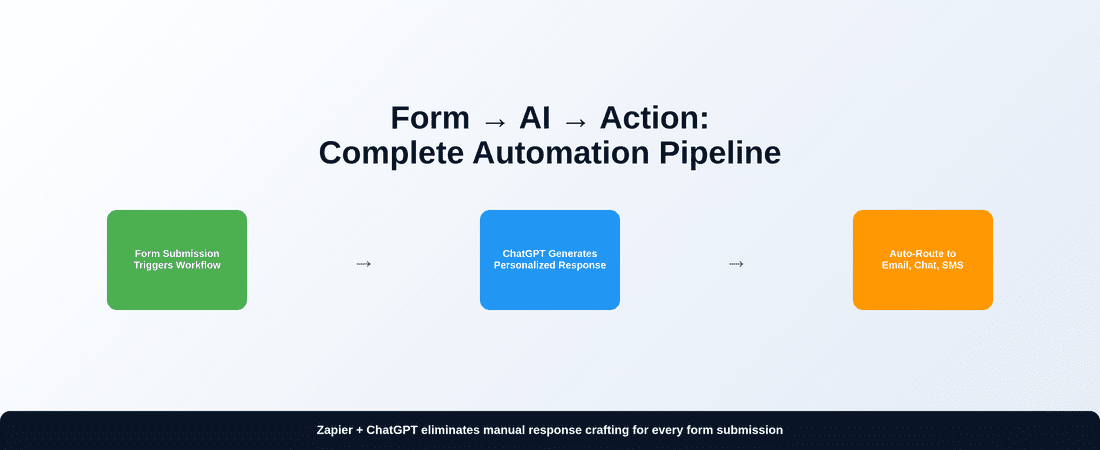
Zapier’s tutorial demonstrates setting up prompts that personalize responses using form data. For example, a customer feedback form collecting names and specific concerns can trigger prompts like “Write a warm, single-paragraph email response thanking them for their feedback and addressing any specific concerns they raised.” The system maps form fields directly into ChatGPT prompts, ensuring each response feels individually crafted.
The platform offers model flexibility through both direct ChatGPT integration (requiring an OpenAI API key) and Zapier’s “AI by Zapier” option, which doesn’t require separate AI accounts and allows switching between different AI models without rebuilding workflows.
Practical Applications for Indian Businesses
Consider a Mumbai-based digital marketing agency handling client inquiry forms on their website. Previously, their account manager spent 2-3 hours daily crafting initial responses to potential clients asking about services, pricing, and timelines. With this automation, each inquiry form submission — containing client name, business type, and specific requirements — automatically generates a personalized preliminary response.
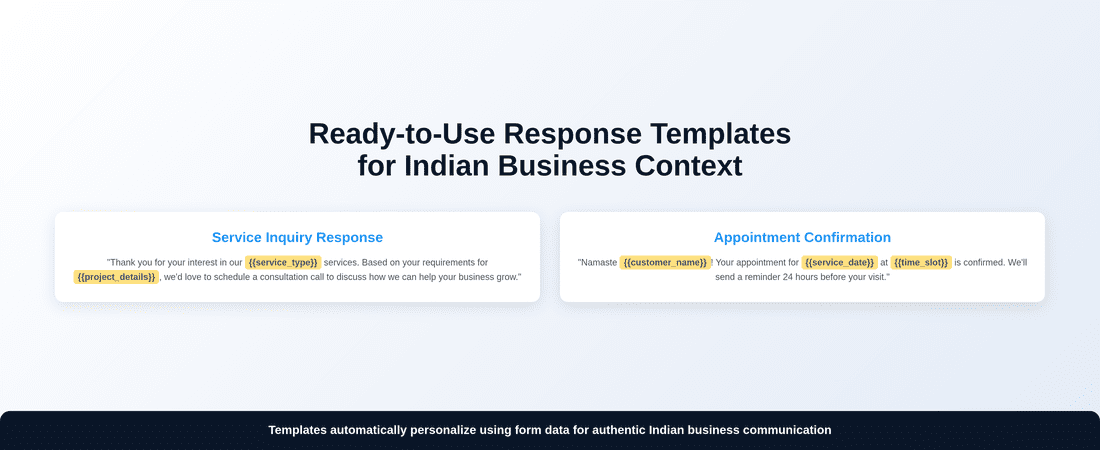
The ChatGPT prompt might read: “Draft a professional response to this business inquiry, addressing their specific requirements and suggesting a consultation call. Keep tone warm but professional, suitable for Indian business context.” The generated draft saves to Gmail, where the account manager can review, customize with specific pricing for the Indian market, and send within minutes rather than starting from scratch.
For service businesses like clinics or salons, the SMS routing becomes particularly valuable. Appointment request forms can trigger automated confirmation texts in English or Hindi, depending on the client’s preferred language specified in the form. The system can handle appointment confirmations, rescheduling acknowledgments, or service follow-ups without manual intervention.
Advanced Routing and Team Collaboration
Zapier’s implementation extends beyond simple email responses. The platform supports conditional routing through “path steps” that analyze submission content and direct responses accordingly. Regular inquiries might generate standard email drafts, while urgent submissions (marked by keywords like “complaint” or “urgent”) automatically post AI-generated summaries to designated Slack channels for immediate team attention.
The spreadsheet integration proves especially useful for businesses requiring audit trails. Each form submission and corresponding AI response logs as a spreadsheet row, creating datasets for prompt refinement and quality control. Teams can batch-review AI outputs at day’s end rather than approving responses individually.
Zapier’s Model Control Protocol (MCP) integration adds another layer of functionality. Once connected to ChatGPT, users can prompt the AI in natural language to access and modify spreadsheet data directly. For example: “Review the last 10 customer feedback submissions and identify common complaints” or “Update the status column for all inquiries from this week.”
Limitations for Indian Businesses
Several constraints affect Indian implementation. The system works primarily with English-language prompts and responses, though ChatGPT can handle some Hindi and regional languages with varying accuracy. Businesses serving customers who prefer communicating in Tamil, Bengali, or other regional languages may find response quality inconsistent.
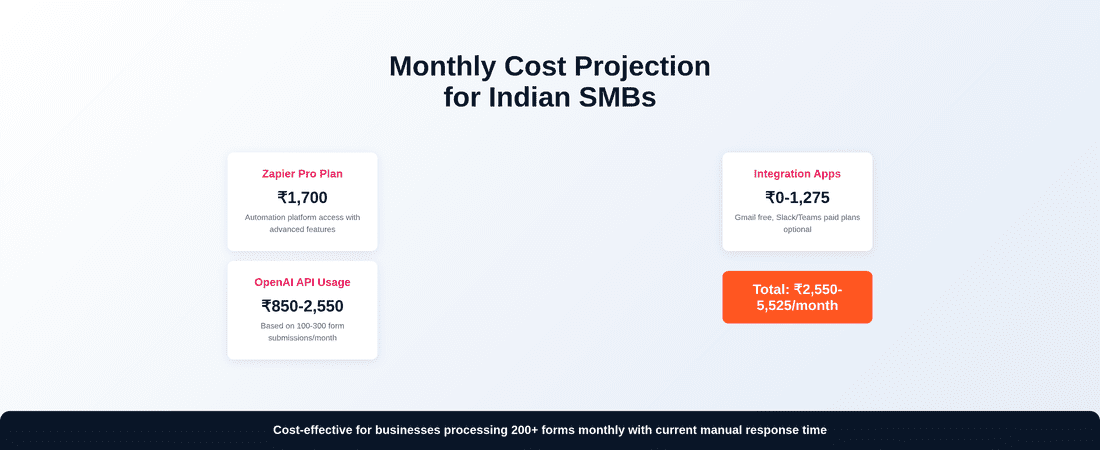
Pricing presents another consideration. OpenAI’s API charges per token (roughly per word), with costs accumulating based on prompt length and response complexity. Heavy form volume could generate significant monthly API expenses, especially when calculated in USD and converted to INR. Zapier’s own pricing starts at approximately ₹1,700 per month for professional features, potentially making this automation cost-prohibitive for smaller Indian businesses.
Integration gaps with popular Indian business tools create workflow friction. While Zapier supports thousands of applications, direct connections to Tally ERP, RazorPay payment processing, or Zoho’s Indian-specific modules remain limited. Businesses using these platforms might need additional integration steps or middleware solutions.
The automation also assumes consistent internet connectivity for real-time processing. In areas with unreliable connectivity, delayed form submissions might trigger responses hours later, reducing the perceived responsiveness that automation aims to improve.
Implementation Strategy and Next Steps
Businesses considering this automation should start with low-stakes forms like newsletter signups or general inquiries rather than customer service complaints or sales leads. This allows prompt refinement and output quality assessment without risking critical customer relationships.
Test different ChatGPT models (GPT-3.5 for cost efficiency versus GPT-4 for response quality) with actual form data to determine optimal cost-benefit balance. Monitor API usage closely during initial weeks to project monthly expenses accurately.
For teams already using Slack or Microsoft Teams for internal communication, prioritize chat app integrations over email drafts. Real-time notifications often prove more valuable than draft emails requiring additional review steps.
Watch for Zapier’s continued expansion of Indian-market integrations and potential ChatGPT improvements in regional language support. The underlying automation framework provides a foundation for enhanced capabilities as both platforms evolve their offerings for global markets.
The combination of form automation and AI response generation represents a significant step toward reducing manual administrative work. For Indian businesses managing high form volumes with limited staff, these workflows can reclaim hours daily while maintaining personalized customer communication standards.