How Nvidia’s Advanced AI Chips Reached China Without Crossing a Border
Nvidia allegedly supplied Chinese AI firms with advanced chips through Southeast Asian data-center partners that rented compute time — a loophole export controls never anticipated. The story, reported by The Neuron, has drawn a Treasury Secretary response, questions about Jensen Huang's future, and renewed Congressional push to restrict remote AI compute access.
The Chip That Never Crossed a Border
Export controls are built on a simple idea: if a restricted product cannot physically travel to a restricted destination, the destination cannot use it. That logic works well for tanks, missile components, and even many classes of industrial equipment. It works less well, as The Neuron reported this week, when the product is a rack of AI accelerators sitting in a Singapore data center and the “delivery” is a login credential.
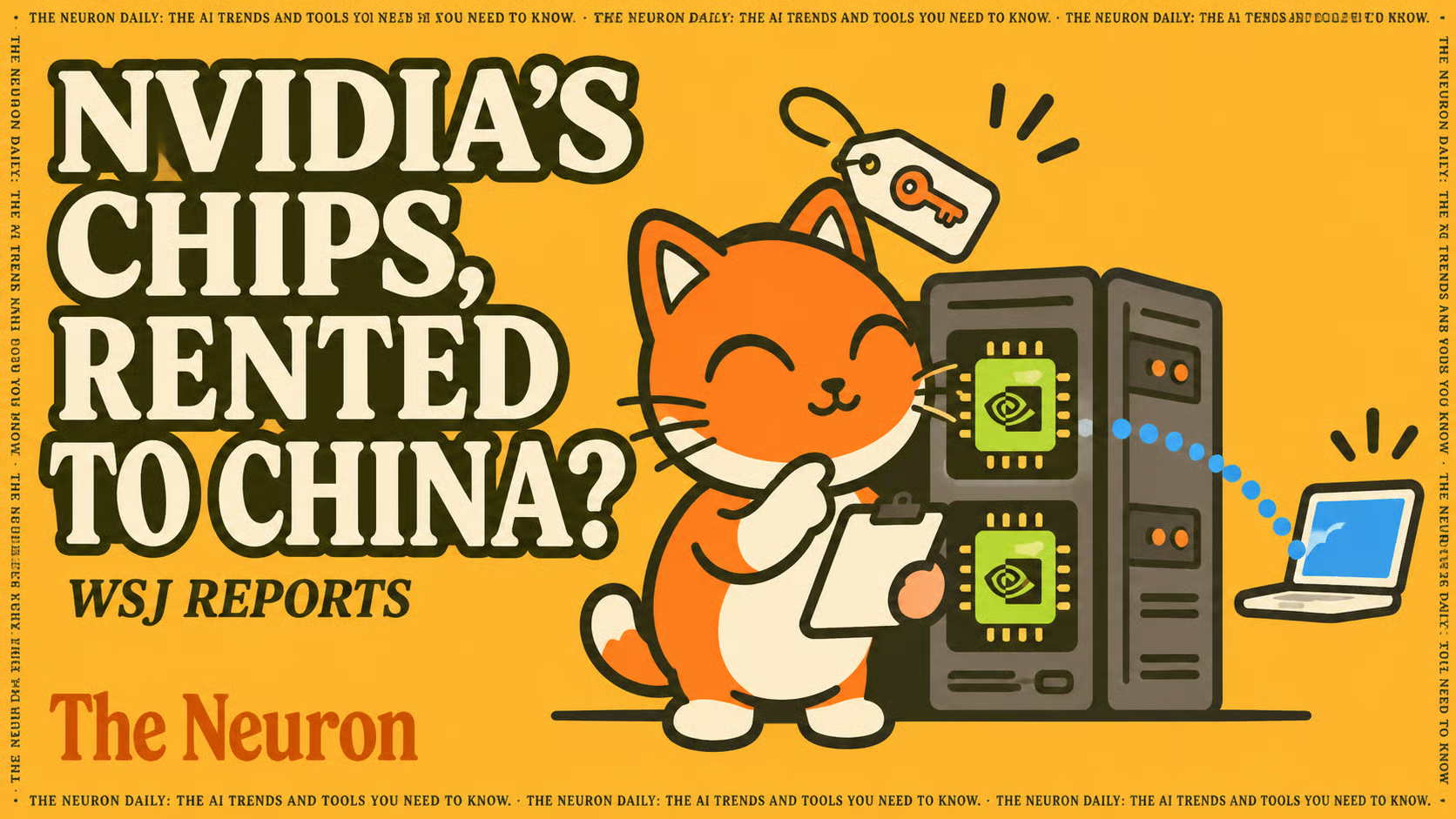
According to a Wall Street Journal report cited by The Neuron, Nvidia cultivated data-center partners across Southeast Asia that purchased its advanced chips legally — because Singapore is not on any export-restriction list — and then sold computing time on those chips to customers in China. The critical phrase is “computing time.” Customs agents can inspect a container. Nobody inspects a login. The chips never move; only the mathematical output of the chips moves, travelling as ordinary internet traffic back to whoever paid for the session.
One of the partners named in reporting, a firm called Megaspeed, has since opened its own outside-lawyer probe. The scale alleged is striking: Megaspeed reportedly arranged nearly $12 billion (roughly ₹1,02,000 crore) in chip orders across 2024 and 2025. That is not a rounding error. That is a substantial portion of the advanced AI compute market routed through a single intermediary.
Why the Loophole Exists and Why It Is Hard to Close
Understanding the gap requires understanding what export controls actually regulate. Current rules govern the physical shipment of controlled hardware. A data center in Singapore buying Nvidia H100 or Blackwell-class GPUs is a legal transaction. The data center then operates those GPUs as a service, the same way a cloud provider rents virtual machines. If a customer in Shanghai logs into that service, no shipment has occurred. The computing has effectively been outsourced to a jurisdiction that is not China, even if every result flows to China.
The Neuron explains that Congress is now reviving bipartisan proposals specifically aimed at restricting China’s remote access to overseas compute — a meaningfully different regulatory target than restricting physical exports. Closing this loophole is technically and diplomatically harder. It requires either monitoring who logs into foreign data centers (a surveillance question) or prohibiting foreign data centers from selling to Chinese customers (an extraterritorial jurisdiction question that other governments may resist).
The political temperature around this story rose further over the weekend. Treasury Secretary Scott Bessent reportedly questioned Nvidia’s China sales, demanded answers within ten days, and urged the board to consider hiring an outside CEO. Jensen Huang, Nvidia’s founder and longtime chief executive, was separately reported to be discussing a return to the CEO role, with allies lobbying the board on his behalf. The first formal test arrives at Tuesday’s earnings call, the first led by interim CEO Colette Kress. Investors and policymakers alike will be listening for disclosures on China-linked revenue, any changes to the customer-backing strategy, and signals on the leadership search.
The Geopolitical Stakes Behind the Silicon
The debate over AI chips is not purely a corporate compliance matter. Both the United States and China treat advanced AI as a pillar of economic competitiveness and military capability, which is why Washington has spent several years building a layered export-control regime aimed at keeping frontier compute out of Chinese hands. The logic, as The Neuron summarises, is that cutting-edge AI rewards raw computing power, so controlling the hardware is equivalent to controlling the capability ceiling.
Skeptics of tight restrictions counter that Chinese labs have continued to build competitive models despite controls, and that every restriction imposes costs on American companies competing in global markets. That tension is not abstract. Hugging Face’s spring report, cited by The Neuron, found that Chinese open-weight models accounted for 41 percent of global downloads. If you have used an AI-powered translation tool, a code assistant, or a document summariser in the past year, there is a meaningful chance the underlying model originated in China.

For Indian businesses and developers, this dynamic carries particular relevance. India sits in what analysts describe as the Global South middle ground: too large to ignore, not fully aligned with either Washington or Beijing on technology standards, and actively courted by both. The Neuron notes that many countries in the Global South see Chinese open-source models as a path toward AI independence from American platforms. Whichever ecosystem becomes the default in a given region shapes prices, data-governance norms, and ultimately who writes the rules for AI applications built on top.
The Pax Silica grouping — which, per The Neuron, includes Japan, Australia, Israel, India, and the United Kingdom — agreed this week to build a joint list of key AI technologies. India’s presence in that group signals an alignment choice, even as Indian startups and enterprises continue to adopt open-weight Chinese models for cost reasons. That tension between geopolitical alignment and practical economics is unlikely to resolve cleanly.
What It Means for the AI Tools You Use
For a developer in Bengaluru or a product manager in Mumbai who uses AI tooling daily, the Nvidia-China story connects to everyday experience in two ways.
First, the availability and pricing of frontier compute affects every AI product built on API access. If a significant volume of advanced Nvidia GPUs has been flowing to Chinese AI labs through Southeast Asian intermediaries, those labs have had more capacity to train and serve competitive open-weight models. More competitive open models generally mean lower API prices and more options — a consumer benefit that sits in awkward tension with the security concerns driving export controls.
Second, the security and data questions around Chinese-origin models are not settled. The Neuron flags that buyers are still working through what it means for enterprise data to pass through models whose training provenance and ongoing governance lie outside Western regulatory frameworks. This is not a hypothetical concern for Indian enterprises subject to data-localisation requirements or companies handling sensitive client information.

What Comes Next
Three near-term developments are worth tracking. Tuesday’s Nvidia earnings call will reveal whether the company addresses the Southeast Asia channel directly or treats it as a legal and PR matter to be managed separately from financial results. Congressional movement on remote-access restrictions will determine whether the loophole that allegedly enabled this arrangement gets legislated shut, and if so, how quickly. And the outcome of Megaspeed’s outside-lawyer probe may produce findings that clarify whether the arrangements described in reporting crossed legal lines or simply exploited a gap that the law had not yet reached.
The deeper question the story surfaces is structural. Export controls designed for physical goods are being applied to an era where the most economically significant output of a chip is a stream of tokens delivered over HTTPS. Updating the regulatory framework to match that reality is a multi-year project involving technical definitions, diplomatic negotiations, and enforcement mechanisms that do not yet exist. Until that framework catches up, the gap between what the rules intend and what is technically possible remains wide — and, apparently, very profitable.
“Nobody inspects a login.” — The Neuron, summarising the core vulnerability in current AI chip export enforcement.
The race for AI dominance runs through silicon, software, and now, it seems, server login credentials issued in Southeast Asia.