Who Owns the Integration Headache Now? Vendors Do — and That Changes Everything for Your Automation Stack
MCP has shifted the burden of managing software integrations from businesses onto the vendors themselves, as explained in a recent n8n blog analysis. For Indian professionals, this matters — but Tally, RazorPay, and Hindi/Gujarati data support mean the full benefit is still a few vendor decisions away.
The Old Deal Is Dead — Vendors Are Now on the Hook
For most of the last decade, connecting two software tools was your problem. Your team had to manage API keys, map data fields, handle authentication tokens, and debug broken connections every time a vendor pushed an update. This is why tools like Zapier and Make built entire businesses out of absorbing that pain. But according to a detailed analysis published on the n8n blog titled “AI made integrations the vendor’s problem”, that contract has fundamentally changed.
The shift has a name: MCP, or Model Context Protocol. And understanding what it actually does — and what it doesn’t — is now a practical concern for any Indian professional building or buying AI-powered automation in 2026.

What MCP Actually Does (In Plain Language)
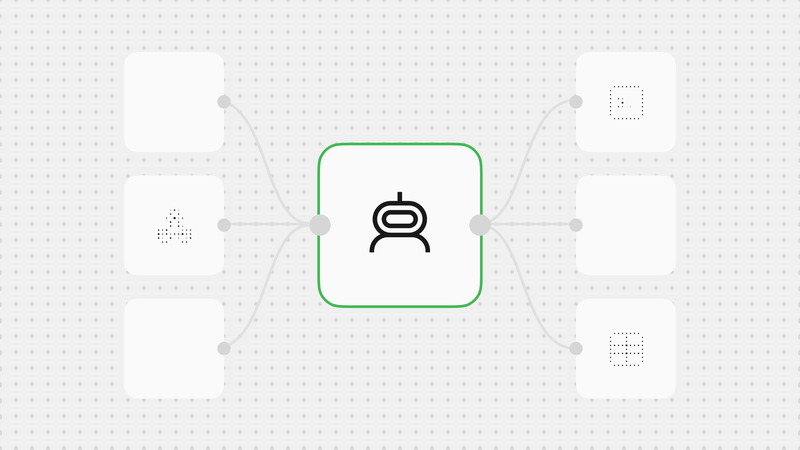
The n8n team describes MCP as a standardised protocol through which a software vendor publishes its own server — a kind of always-on menu of capabilities that an AI agent can read and act upon automatically. Instead of your developer writing custom code to connect, say, your CRM to your invoicing tool, the CRM vendor stands up an MCP server that declares what it can do. The AI agent discovers those capabilities at runtime and decides when and how to use them.
The n8n article puts it plainly: the provider now deals with versioning, discovery, security of the transport layer, and keeping the server current as the MCP specification evolves. As a consumer of that service — whether you are a solo consultant in Pune or running a mid-size distribution business in Ahmedabad — you theoretically just authenticate and go.
This is a meaningful flip from the old iPaaS model, where integration complexity was the buyer’s burden to manage, repeat, and maintain once per connection.
Three Layers of Integration You Should Know About
The n8n team does not let vendors off easily, though. The article explains that integrations in 2026 are not a single-lane exercise. There are now at least three distinct ways tools connect to AI agents, each with different tradeoffs.
MCP Servers
Vendors publish a server that exposes tools, resources, and prompt templates. The agent autonomously decides when to call which tool. Vendors carry the maintenance burden. The n8n analysis notes that recent revisions to the MCP spec made the protocol stateless with per-request capability discovery, which means vendors are actively chasing a moving specification.
Hooks
These are deterministic scripts that fire at fixed points in an agent’s workflow — before a tool call, after it, at session start or end. The n8n article describes hook configuration as a JSON file, with the agent harness communicating via stdin/stdout. Claude Code, for example, supports hooks that fire once per session, once per turn, or on every tool call. Hooks give security or platform teams a way to enforce policy, log every action to an audit trail, or stop a misbehaving agent mid-run. For a CFO concerned about an AI agent accessing sensitive financial data without approval, this matters enormously.
SDKs
For developers building serious agent applications, a growing share of integration happens inside the application code itself. The n8n article uses the Claude Agent SDK as an example, noting that you can define custom tools directly inside the same codebase as the agent rather than spinning up a separate server process. This makes integration a coding concern — which, as the n8n team points out, sits more naturally under what they call “Codability” rather than the old integrability axis.
A Concrete Indian Business Scenario
Imagine you run a mid-size textile export business based in Surat. You use Zoho CRM to manage your buyer relationships, a local WhatsApp Business API bridge for customer communication, and Tally for your accounting. Right now, connecting an AI agent to generate buyer follow-up reminders, check outstanding invoices in Tally, and push messages via WhatsApp requires custom API work at every junction.
Under the MCP model the n8n article describes, Zoho (which already has an active developer ecosystem) could publish an MCP server exposing your CRM contacts and deal stages. Your AI agent authenticates once and discovers those tools automatically. The agent reads an overdue deal, checks the buyer’s last communication date, and drafts a follow-up — without your team manually wiring each data field.
The n8n article also introduces the concept of Skills: markdown instruction files loaded into the model’s context at runtime that tell an agent not just what tools exist, but in what order to call them and how to handle the vendor’s specific conventions. MCP server providers are now including Skills templates as part of their product offering, according to the n8n team. For your Surat export business, a Zoho Skills file might instruct the agent to always check deal stage before drafting follow-up language — preventing the embarrassing case of a “We miss you” message going to a buyer who signed a contract yesterday.
The Limitations You Should Not Ignore
The optimism of the MCP shift comes with real caveats, particularly for Indian businesses.
What to Watch Next
The n8n team’s conclusion is measured: the share of MCP versus API, hooks, and SDK integrations will become more balanced over time, not MCP-dominant. Economics will prevent businesses from routing every tool call through token-heavy MCP interactions. Simpler API calls will continue to be the right tool for high-frequency, low-complexity tasks.
For non-technical professionals in India, the most practical near-term signal to watch is whether Zoho, RazorPay, or any Indian payroll or ERP vendor announces an MCP server. That is the moment the burden-shift the n8n article describes becomes tangible in an Indian business context. Until then, the integration problem has moved partly to vendors — but not far enough to make hands-off automation a reality for most Indian SME tech stacks.
If you want to begin experimenting without waiting for the ecosystem to mature, the n8n platform supports API integrations, an SDK, MCP servers, and hooks in a single environment, making it a reasonable place to test which integration pattern fits your existing tools before committing to any one approach.