Legal Teams Are Cutting Document Review from Days to Hours with Claude AI
Anthropic's legal team automated routine document reviews with Claude AI, cutting turnaround times from days to hours across marketing content, contracts, and compliance. Indian legal teams can adapt similar workflows but must consider language limitations and local compliance requirements.
The Legal Breakthrough That’s Changing Everything
Legal departments across enterprises are discovering something remarkable: AI can handle the tedious work that eats up their days, freeing lawyers to focus on strategic counsel. According to Anthropic’s detailed case study at https://claude.com/blog/how-anthropic-uses-claude-legal, their internal legal team has transformed routine document reviews from multi-day processes into same-day turnarounds.
Mark Pike, Associate General Counsel at Anthropic, built these automation workflows without writing a single line of code. His team identified their biggest time drains—marketing content reviews, contract redlining, privacy assessments, and conflict-of-interest forms—then systematically automated each one using Claude AI.
“Before Claude, I had a ton of tactical busy work,” Pike explains in Anthropic’s announcement. “Things I would put off until the end of the day because I just knew it would take a lot of time, but not using the best parts of my brain.”
Four Automated Workflows That Actually Work
Marketing Content Self-Review Tool
The Anthropic team’s marketing review workflow tackles a familiar pain point: last-minute blog post reviews with impossible deadlines. Their solution is a self-service tool pinned directly in Slack that marketers can use before submitting formal requests.
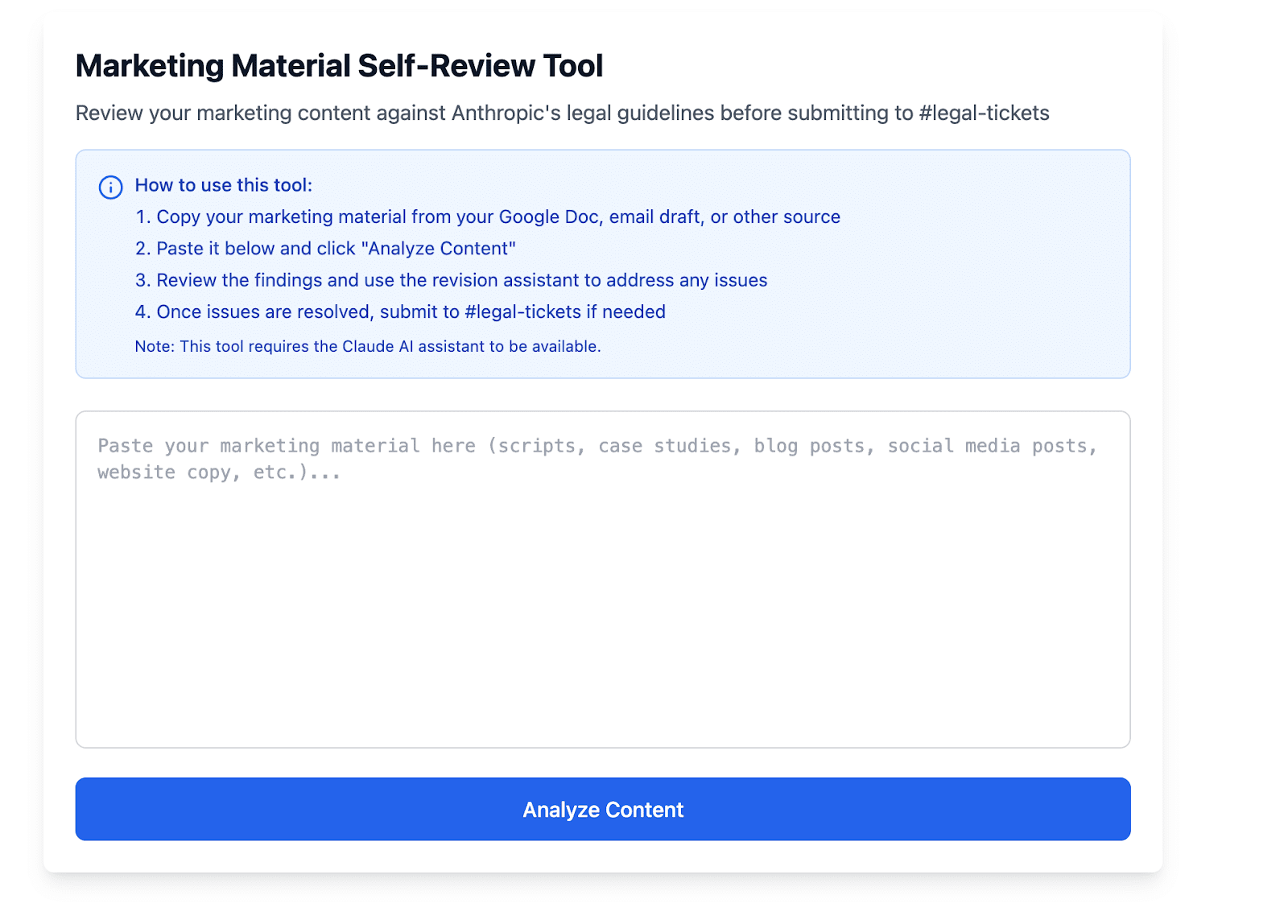
The system analyzes marketing content using what Anthropic calls “Skills”—files containing the legal team’s historical guidance and review frameworks. Claude identifies issues like trademark violations, publicity rights concerns, and statistical accuracy problems, then flags them by risk level and suggests specific fixes.
For an Indian consulting firm, imagine your legal team creating a similar workflow for client proposals. Before submitting a proposal mentioning “India’s fastest-growing fintech” or including competitor logos, your business development team would get automated guidance: “Do you have permission for this logo? Can you substantiate this growth claim? This client name needs permission to use.”
Since implementing this workflow, Anthropic’s legal team cut marketing review turnarounds from 2-3 days down to 24 hours.
Contract Redlining Automation
Contract comparison and redlining consumed hours of manual work for Anthropic’s commercial team. Their Claude workflow now compares document versions in Google Docs and Office 365, highlights changes, and recommends language from their commercial playbook in real-time.
Team members can ask Claude directly within Google Docs: “Do you think this liability clause meets our needs?” and receive immediate feedback with suggested alternatives from their approved language library.
For Indian businesses working with international clients, this becomes particularly valuable. Your legal team could create Skills that automatically flag currency clauses (suggesting INR alternatives), identify jurisdiction issues (recommending Indian courts for disputes), and ensure compliance with local regulations like the Information Technology Act.
Conflict-of-Interest Processing
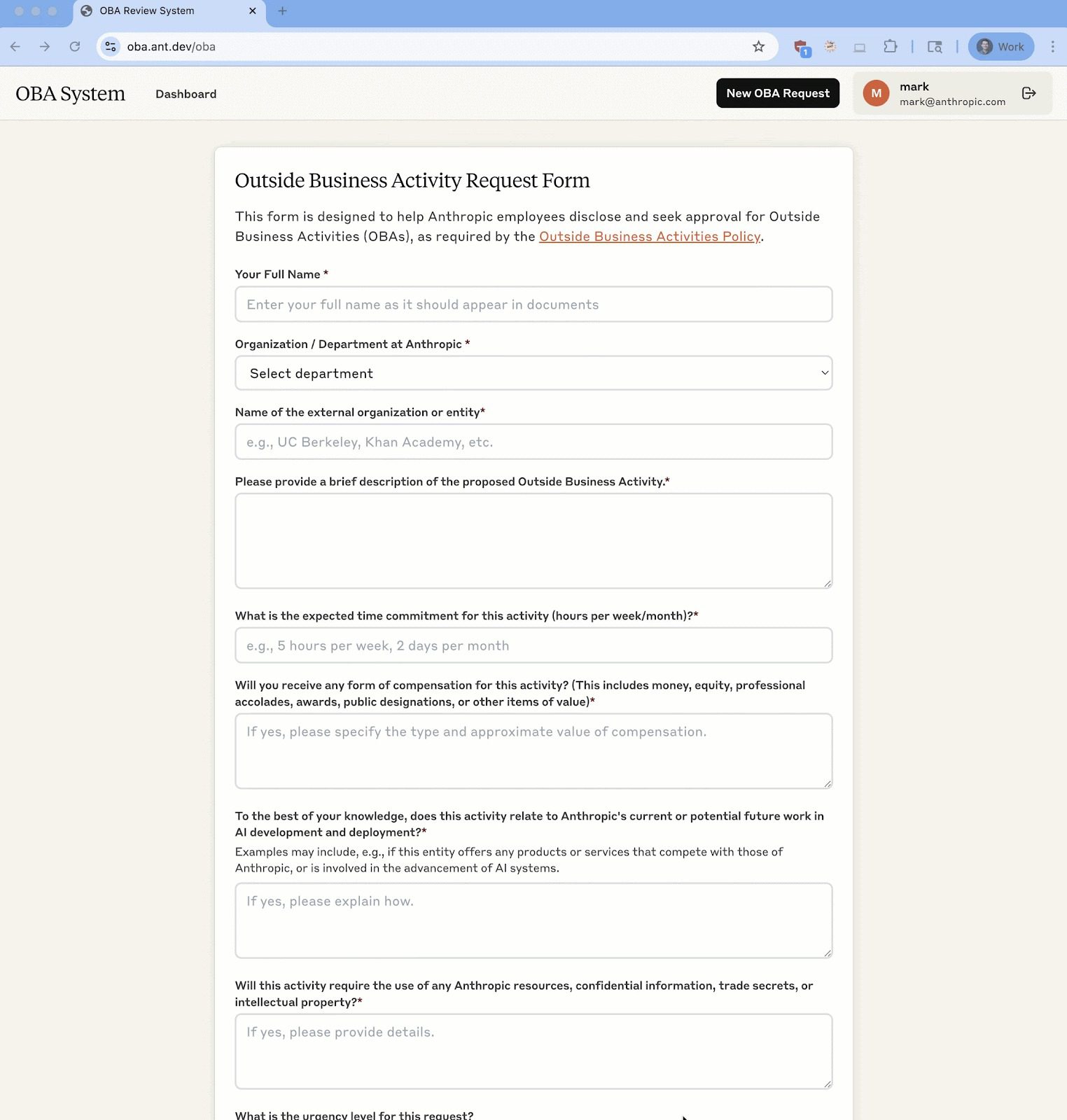
Employee requests to join nonprofit boards or take consulting work previously required extensive back-and-forth interviews. Anthropic’s automated workflow has employees fill out detailed forms describing proposed activities. Claude analyzes submissions against company conflict-of-interest policies and sends recommendations to lawyers via Slack.
“It used to be that you’d have to interview employees with a bit of back-and-forth to figure out the details,” Pike notes. “With this workflow, Claude reads the form, asks for more information if it needs to, and suggests an outcome.”
For Indian enterprises with strict compliance requirements, this automation could extend to vendor onboarding, where Claude reviews GST certificates, PAN verification, and compliance documents against company policies before routing to procurement teams.
Privacy Impact Assessment Generation
Writing privacy impact assessments from scratch was repetitive work following similar patterns. The team now uses Claude’s Model Context Protocol (MCP) to connect to Google Drive folders containing previous assessments, using historical documents as templates for new evaluations.
This approach would be particularly relevant for Indian businesses navigating the Digital Personal Data Protection Act. Your legal team could build a library of DPDPA-compliant assessment templates that Claude uses to generate first drafts for new data processing activities.
The Reality for Indian Businesses
While Anthropic’s results are impressive, Indian legal teams face specific considerations when implementing similar automation:
Building Your Legal AI Strategy
Pike’s approach offers a practical roadmap for Indian legal teams:
What to Watch For
Legal AI automation is advancing rapidly, but success requires realistic expectations. Start with your most repetitive, time-consuming tasks. Build Skills gradually, focusing on one workflow at a time. Always verify AI outputs, especially for citations and legal precedents.
For Indian legal teams, the opportunity lies in adapting these approaches to local requirements. Consider starting with English-language vendor contracts or employment agreements where AI can provide immediate value, then expanding as the technology improves its handling of Indian legal contexts.
The goal isn’t replacing legal expertise—it’s reclaiming lawyers’ time for strategic counsel that actually requires human judgment.